Chances are, you’ve used ‘Girl Math’ to justify a questionable financial decision recently. If not, you likely use the logic anyway but didn’t know the pop culture label to justify it.
The term “Girl Math” rose to prominence in an August 2023 TikTok by real estate developer and content creator Samantha James; however, a New Zealand radio show, ZM Fletch, Vaughan, and Hayley popularized it. These three radio hosts refer to themselves as the “CEOs of Girl Math” and advertise that a person can call in to their show to “justify their purchases” (Fletch, 2023). For instance, in one episode, a woman named Kelsey called in after purchasing a $699 hairdryer. After multiple calculations, the hosts determined that by no longer needing professional salon services, Kelsey would earn up to $70,000 over her lifetime.
Most of the ‘rules’ in Girl Math reflect famous behavioral economics concepts such as cost discounting, framing, anchoring, sunk cost, the pain of payment, present bias, and more. Here is the economic theory behind a few of our favorite Girl Math delusions (perhaps I will explain more in a future blog).
“Using Cash Makes it Free”
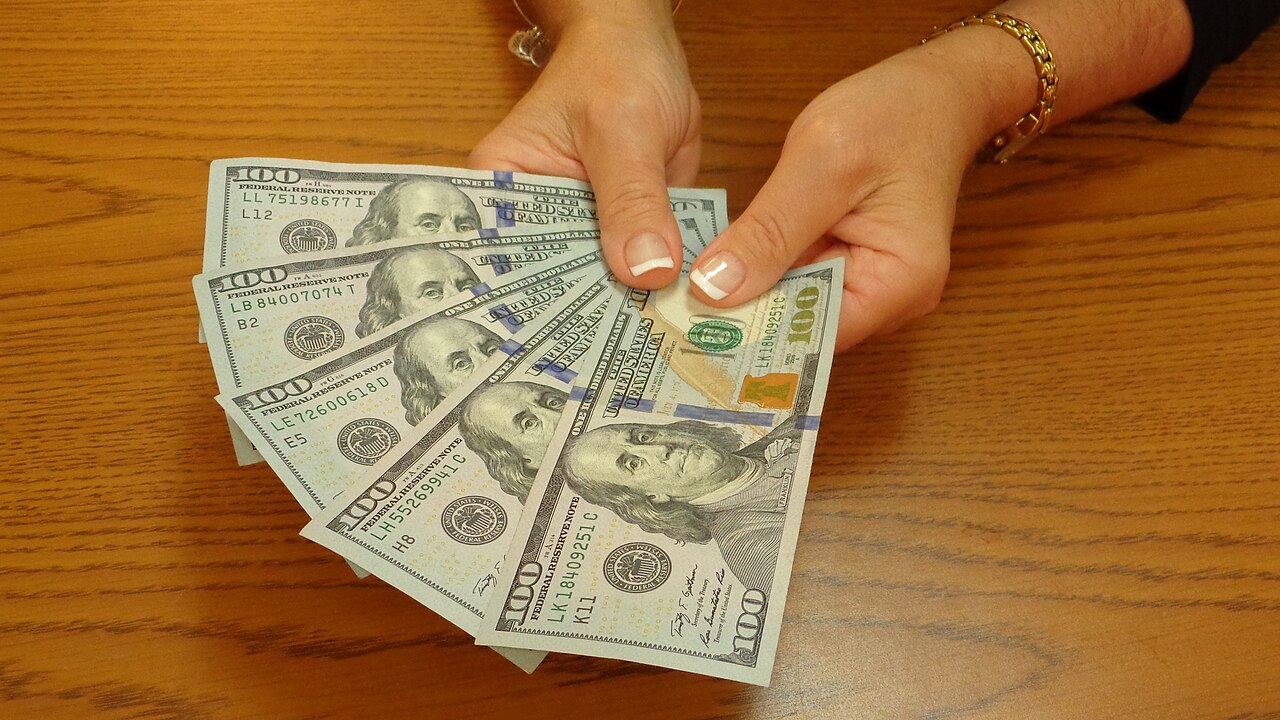
According to a 2023 Credit Karma survey, 1 in 5 Gen-Z members say they use cash more often because “it feels like free money” (Credit Karma, 2023). However, this mindset is cross-generational: a survey of 2,000 US adults, evenly split across generations, found that 29% of Americans believe spending pocket cash “does not count” (StudyFinds, 2024). This concept in Girl Math is supported by the “pain of paying”: the guilt consumers feel after purchasing. In a recent study, Bechler (2023) suggests that people use cash to forget their purchase, reducing the post-payment shame. Without purchase reminders on credit card/bank statements, this untraceable payment method lets users purchase and move on.
“Sales Mean You’re Saving Money”
Many businesses use sales to make purchases more attractive. However, they are not always as fleeting as you might think. Consumers’ Checkbook (2022) tracked 30 items on Foot Locker and found they were on sale 98% of the time. But because of ‘price anchoring,’ Girl Math enthusiasts believe purchasing this item on sale is saving money. Price anchoring is the idea of presenting an item’s cost to establish a reference point to compare with similar items. This process influences customer behavior and perceptions, making them more likely to buy items (Zhuang, 2023). When customers see a sale, they feel an urgency to buy because they (sometimes falsely) believe the deal will not last very long. Especially when an item is a necessity, and the customer has already made peace with the purchase, a price reduction will be viewed as saving money.
“Cost-Per-Wear”
When considering buying an expensive item, many followers of Girl Math will break the price down into smaller costs. For example, if a jacket costs $300, consider it only about $1 a day for a year! Calculating cost-per-use utilizes the “denomination effect”: people are more willing to spend money when it is presented in smaller portions (Raghubir, 2009). This concept is rooted in a topic popularized by Tversky and Kahneman (1981) called “framing.” Framing is how rephrasing/re-representing information can lead to different choices, and that is what happens with cost-per-wear. Girl Math enthusiasts reframe buying an item as smaller payments, which makes the purchase feel more digestible.
Ultimately, Girl Math isn’t actually about being bad at math, nor is it exclusively for girls. It is a highly relatable, culturally viral expression of the cognitive biases many of us share. We are incredibly adept at inventing elaborate narratives to make our irrational choices feel logical (see Blog Post #1 for more). So the next time you use Girl Math to explain why your refunded concert ticket means your new shoes were technically “free,” don’t feel too guilty because you are just practicing textbook behavioral economics.