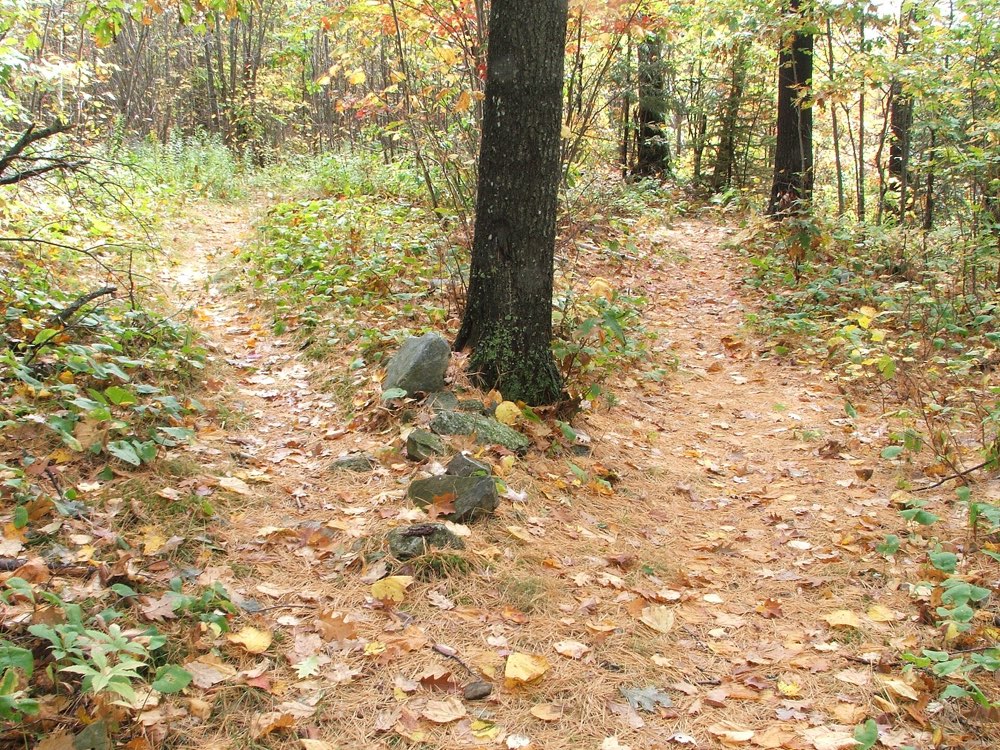
Two roads diverged in a yellow wood,
And sorry I could not travel both
And be one traveler, long I stood
And looked down one as far as I could
To where it bent in the undergrowth;Then took the other, as just as fair,
And having perhaps the better claim,
Because it was grassy and wanted wear;
Though as for that the passing there
Had worn them really about the same,And both that morning equally lay
In leaves no step had trodden black.
Oh, I kept the first for another day!
Yet knowing how way leads on to way,
I doubted if I should ever come back.I shall be telling this with a sigh
Somewhere ages and ages hence:
Two roads diverged in a wood, and I—
I took the one less traveled by,
And that has made all the difference.
You may be familiar with the famous Robert Frost poem titled “The Road Not Taken”. Maybe you read it in school. Perhaps you saw it on one of those motivating posters telling you not to be afraid to ‘take the road less traveled’. Many people read this work or remember the tagline as an inspiring charge to be courageous, forge your own path, and be unique. It is a lovely sentiment, but it misses a tension that makes the poem much more interesting.
If you look closely at the words, you will notice it explicitly states that both roads were roughly identical. He initially thinks one has “perhaps the better claim” because it looks less worn, but then admits that passing travelers had worn them “really about the same” and both roads “equally lay.” Frost wasn’t writing a manifesto on individualism; he was writing about the human tendency to make an arbitrary choice and then lie to ourselves years later by claiming it was a stroke of visionary genius.
Viewed through the lens of Behavioral Economics, this story illustrates choice-supportive bias: our tendency to remember the option we chose more favorably than the alternatives. When we’re faced with two seemingly equivalent options, choosing between them can feel like a coin flip. Yet we’re often uncomfortable admitting that chance, rather than careful judgment, might shape our lives. So, after selecting an arbitrary choice, our brains work to justify it. Usually, we look at the ‘path left behind’ and convince ourselves it was somehow fundamentally different than the one we took. So, what felt uncertain at the time becomes the obvious decision.
Once we know where a choice has led us, it becomes easy to confuse its significance with our own foresight. But saying a choice mattered is not the same as saying we knew why it would matter when we made it. The road the speaker takes may genuinely make “all the difference.” But that does not prove it was the better option in the first place.
To me, that is what makes Frost’s poem so brilliant. It isn’t a motivational cliché about blazing a new trail; it’s a quiet joke about the stories we tell ourselves to make sense of our lives. We retroactively create these elaborate narratives so we don’t have to admit we were just guessing. And then, “somewhere ages and ages hence”, we can tell the story of how we took “the one less traveled by”, and that it made “all the difference” (even though when we chose it, the roads looked about the same).